
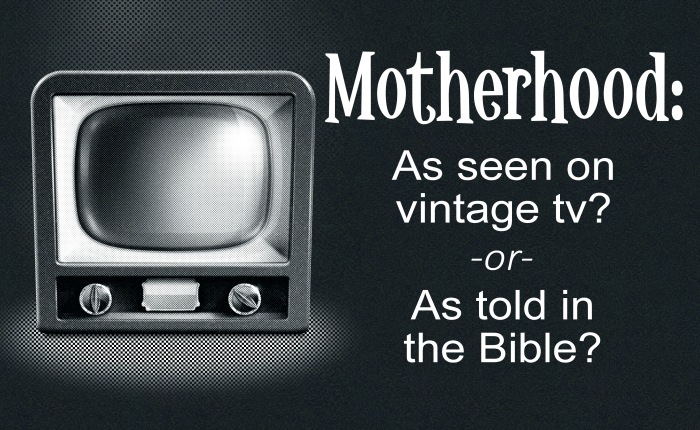
There exists a cultural tendency to view Biblical motherhood through the make-believe, one-dimensional filter of a postwar era television sitcom. While God’s Word sets forth the divine standard of how motherhood is to be fulfilled, it does not do so by scripting fictional scenes in which professionally trained actresses wearing belted dresses, pearl necklaces, and high heels heroically save the day by cleaning the house, cooking the dinner, and counseling the children. Instead, the Bible vividly portrays motherhood as it really is: Multi-dimensional and difficult. It is complex! While the Bible declares that motherhood was created by our powerful and holy God (Gen. 1:26-28; 2:18-25), it also acknowledges that this honorable role is lived out by weak and finite beings who reside in a sin-wrecked world. So, motherhood is messy yet beautiful, taxing yet tranquil, under-appreciated yet highly exalted. It is familiar with heartache, but it also knows joy. While it is not immune to problems, it possesses a resolve to overcome. These and other challenging characteristics of motherhood are declared and described by the Bible in raw and real fashion, pushing the participants of motherhood toward the inspired ideal as well as assuring them that God is compassionately aware of the complexities that abound in the role they are fulfilling. Consider the following examples from God’s Word.
Desperation and Determination
Sometimes, motherhood hurts. And most of the time, the hurt comes from the inability of the mother to shield her children from pain. But motherhood moves its participants to keep looking, digging, and praying for ways to make the hurting stop. It faces desperation with determination. While Jesus was in the region of Tyre and Sidon, a woman whose daughter had an unclean spirit approached Him, begging for help (Matt. 15:21-28; Mk. 7:24-30). The situation was severe: “My daughter is grievously vexed” (Matt. 15:22). Her child was hurting and helpless; and motherhood drove the woman to do everything in her power to remedy the situation. She went to Jesus! She didn’t allow her gender or race to stop her. She didn’t allow the initial silence of the Lord to deter her, nor did she let His faith-testing words discourage her. What a tremendous scene of Biblical motherhood!
Dreams and Disappointments
Most little girls dream of one day becoming mommies. As they grow a little older, the dreams might fade for a time, but eventually the future that was playfully imagined as a child begins to develop into reality as an adult. At least, this is the case for most. There are others who find themselves unable to participate in motherhood, grieving the loss of children they never had. And this pain, this mourning, is one of the raw realities that the Bible acknowledges. Even though she eventually gave birth to Samuel, Hannah vividly displays the grief and even shame that some experience when their lifelong dreams of motherhood don’t come to fruition. While unable to conceive, 1 Samuel 1:1-15 describes her as weeping, fretting, experiencing affliction, and being of sorrowful spirit. While this kind hurt is understandable, those who are unable to enjoy the God-given blessing of motherhood should remember God is aware of their sorrow and longs for them to find consolation in His Fatherhood.
Dependence and Devotion
More than a few mothers admit that they decided to have children because they believed doing so would bring them the attention and affection they were not getting otherwise. They depended on motherhood to accomplish something it was never designed to do. Showing again that the Bible deals with the reality of this parental role—even the reality of its abuse—one would do well to consider Genesis 29:32: “And Leah conceived, and bare a son, and she called his name Reuben: for she said, Surely the LORD hath looked upon my affliction; now therefore my husband will love me” (emp. mine, PS). But Leah was wrong. And she continued to be wrong having several other children under this same false assumption. Being devoted to the God who provides the blessing of motherhood is far better than depending on motherhood to win the devotion of others.
Many other Bible examples could be listed, showing that real-life motherhood, even when done God’s way, doesn’t always look as pretty as the stereotypes portray. But it’s in these very real places that the Bible offers consolation, issues warning, provides encouragement, and inspires steadfastness for those who participate in motherhood, as well as so many more!
–Preston Silcox
 Margaret Street